The Dunes LInks Course

A great course for all levels of golfer. Superb conditioning and fantastic architecture and layout. Topped of by excellent facilities and friendly staff.
The Dunes Links Course
The Dunes Golf Links is a regular agenda item on most golf tours to Mornington and regularly features in the top 100 rankings of Australian courses. I had the pleasure of playing The Links course at The Dunes on the Mornington Peninsula twice within a month.
On the first round we were blessed with glorious golfing conditions and played from the white tees. Blue skies, sunshine, and a gentle breeze made for a stunning morning on the Links Course at The Dunes. Second time round we played from the blue tees and there was a moderate breeze to keep us on our toes.
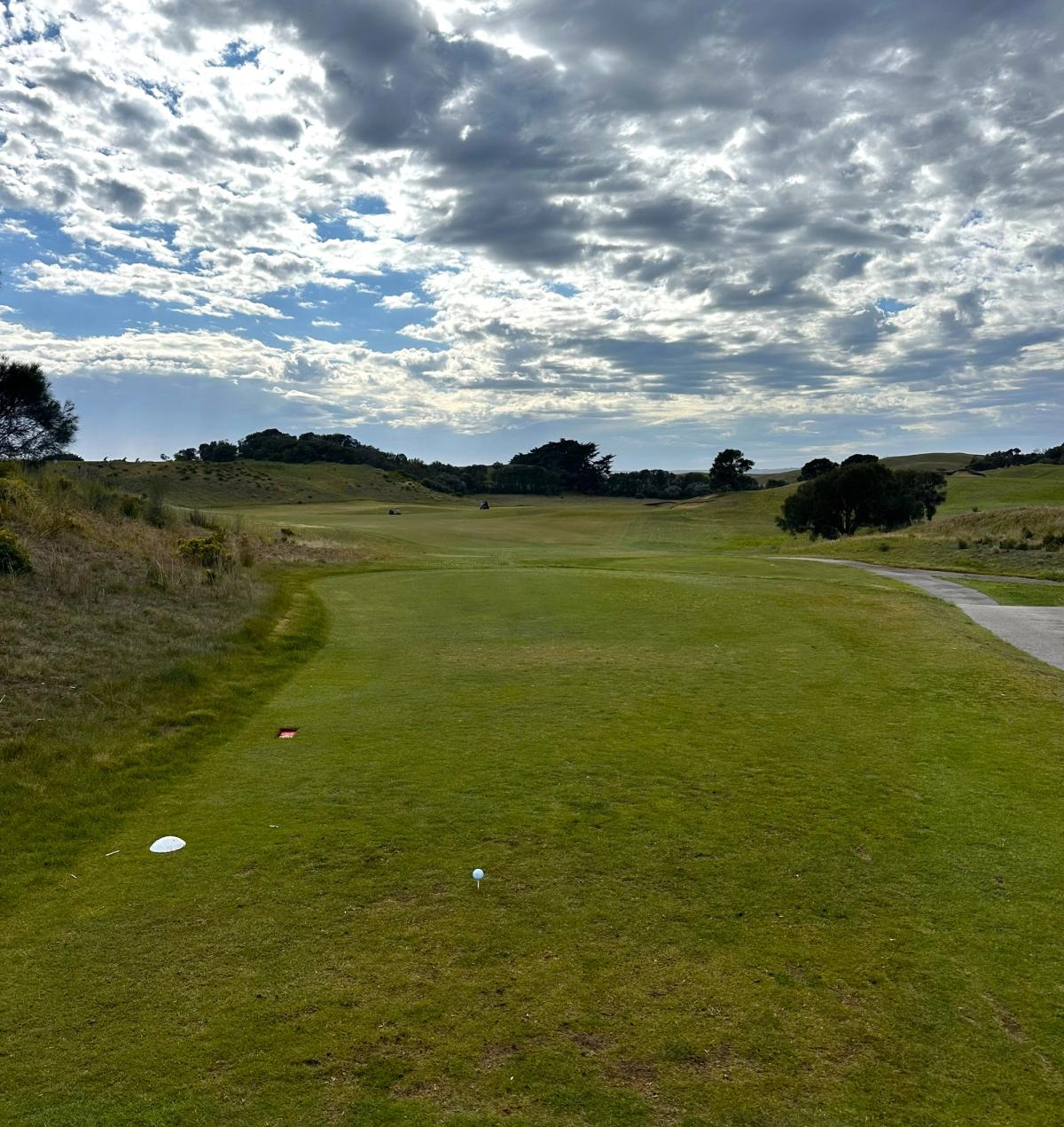
The Tony Cashmore redesigned par 72 course lies across a natural dune system, and the routing uses the rises and falls in the land in a way that always seems natural and not at all contrived. From the white tees at 5677 metres, the layout allows golfers of all abilities to enjoy the course. The championship course measures 6232 metres and makes it a really good test of golf. The championship course from the Black tees measures 6459 metres. The extra distance from the white to blue tees makes the landing areas tighten, bunkers come more directly into play, and several of the longer par-5’s stretch into genuine three-shot territory for all but the longest hitters.
One of the defining characteristics of The Dunes is its bunkering. They are numerous, well positioned and form the primary source of challenge on many holes. They are mostly deep with steep faces, and escaping from them—particularly the green-side bunkers—requires a competent short game. The fairway bunkers tend to be placed at common landing distances, especially from the championship tees although there should be no complacency from the white tees. Even when not directly in play the bunkers are always present in mind and a constant source of calculations on the tee. Golfers not used to the firm and running fairways of Mornington need to quickly alter their calculations to include total run out distances to avoid the many fairway bunkers. On the back nine the discrete fairway bunkering gives way to vast waste areas that resemble moonscapes and should be avoided at all costs.
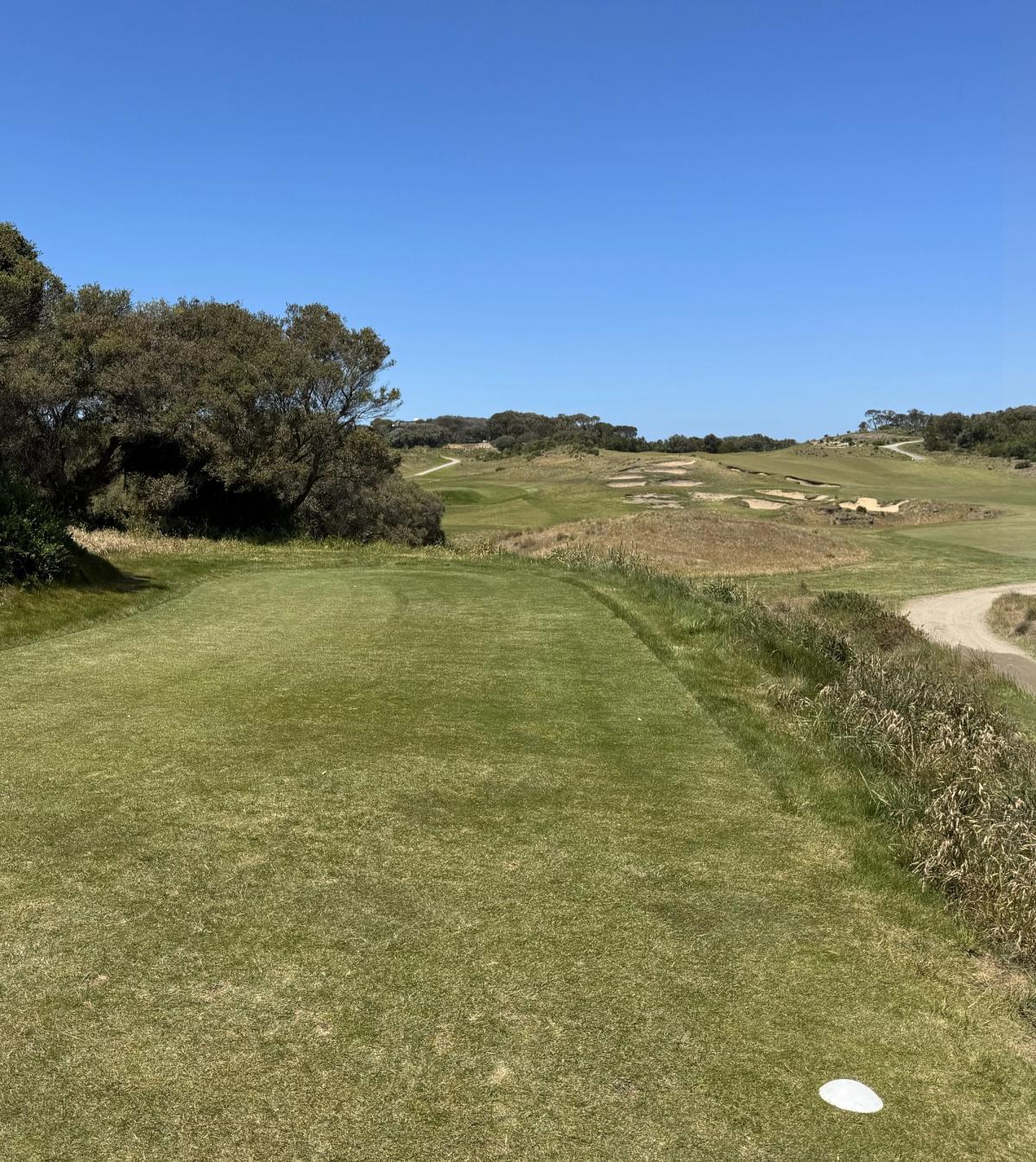
The greens were firm but receptive enough to hold well-struck approaches. On the days we played the greens were quite fast. Many greens have subtle internal contours rather than dramatic tiers, meaning that approach accuracy is still important even when flag positions are not overly challenging. Like most courses some local knowledge would assist in knowing more precisely where to finish on the green.
The par-4 9th hole is often identified as a highlight. The tee shot is partially obscured by the natural rise in the land, and the hole then drops into a broad landing area which is guarded by a small pot bunker in the centre of the fairway. The approach, however, is demanding. The green is protected by bunkers at the front and sides. The pressure of playing this hole is added to by the well lubricated audience from the clubhouse.
On the back nine, the par-5 12th stands out as a great example of the course architecture. A left to right dogleg par 5, the corner is guarded by one of the aforementioned giant wastelands. The tee shot needs to avoid the waste area but not by so much as to severely lengthen the hole. Depending on the finishing position of the drive the second shot can be blind and must navigate the bunker complex that protects the right side of the fairway and those short left of the green. The third shot is uphill to a green with a narrow entrance.
From the white tees, the course offered a fair challenge across all 18 holes. The par-5s were not overly long and the short 5th was easily reachable in two. The par-4s varied in length and design, with several demanding strong tee shots to avoid bunkers on both sides of the landing zone. The par-3s were balanced and even the short 3rd at 124 metres proved challenging due to bunker placement and the green complex in general. Overall playing from the white tees allowed most golfers to experience the full strategy of the course without being overpowered by length.
However, from the blue tees it was a very different proposition. Many holes add considerable distance from the back markers, altering both sight lines and angles. Several bunkers that were not in play from the whites were directly relevant from the blues. Approaches also lengthen, increasing the challenge of holding firm greens.
In summary, The Dunes Golf Links delivered a well-structured and strategically interesting round of golf. On our first round the calm and sunny conditions allowed the design features, particularly the bunkering, routing and green surrounds—to be evaluated without weather-related influence. The course is challenging but fair from the white tees and becomes a genuinely stern test from the blue tees. Signature holes such as the 5th, 9th, 12th and 17th provide clear examples of the design philosophy: penal bunkering used to shape decisions, firm playing surfaces that reward control, and greens that require accurate approaches. Overall, the course presents a comprehensive examination of shot-making and strategy, suitable for both regular golfers and those seeking a more demanding test.
After the rounds we enjoyed a few refreshments in the lovely clubhouse which looks out over the 9th green. A truly great couple of days on the course and in the clubhouse. Whilst not part of any technical assessment, the quality and friendliness of the people at a golf course can make a huge difference to a golfers experience. Each time we played The Dunes the staff were fantastic and we could not fault their attitude and willingness to help. If you ever get the opportunity to play The Dunes grab it with both hands. You will not be disappointed.